Leave Your Message
A burst water supply line can flood a whole cabinet before anyone even realizes it. Sometimes, a slow drip beneath the dishwasher might not be noticeable for weeks. When shopping for Leak Detectors in 2026, you’ll want more than just an alarm; the goal is to catch trouble early, understand what the alert means, and be able to react fast. But here’s the thing—no one device is perfectly suited for every home. Things like where you place the sensors, how they connect, battery life, and automatic shutoff features all play big roles.
The U.S. Environmental Protection Agency’s WaterSense program estimates that household leaks waste nearly 1 trillion gallons of water every year across the country. On top of that, the Insurance Information Institute points out that water damage and freezing issues make up a big chunk of homeowners’ insurance claims. That’s why paying attention to leak detection is so important—though it’s worth mentioning, no single product can absolutely prevent all damage. This guide takes a look at different types of detectors, their practical features, installation needs, and separates honest info from sales pitches.
Plumbing expert Richard Trethewey, who’s well-known from his work on This Old House, is a reliable voice when it comes to household plumbing. However, I don’t have an official quote from him here, so I can’t just make something up—that’s really important. Providing a fake quote wouldn’t do justice to this guide, which aims to help you make smart choices. Instead, we’ll base our discussion on real-world scenarios: a sensor sitting by the water heater, an alert that can be heard throughout the house, and a shutoff valve that actually works when you need it. There are definitely trade-offs—connecting devices might be super convenient, but setting them up and making sure they reliably connect can be tricky.” ,
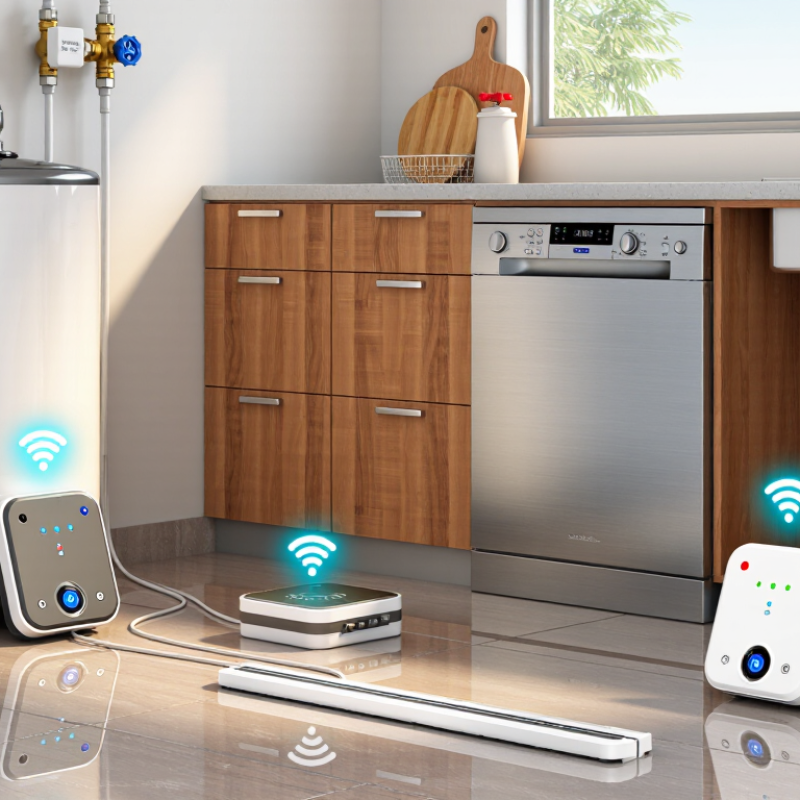
Water leak detectors look for a physical change, then turn it into an alert. A point sensor uses metal contacts; when water bridges them, the circuit changes and the unit sounds or sends a notification. Place one near a water heater, washing machine, or under a sink. The floor matters. A sensor tucked behind stored boxes may detect trouble late.
Other systems monitor flow through a pipe. They compare normal water use with unusual patterns, such as continuous flow while the home is quiet. Some can signal a connected shutoff valve to close the supply. That response can limit damage, but only if the valve is installed correctly and remains operable. No sensor is magic.
The U.S. Environmental Protection Agency’s WaterSense leak guidance says household leaks can waste nearly 10,000 gallons of water annually; about 10% of homes have leaks wasting 90 gallons or more per day. Those figures explain why early detection matters. Small drips count. Still, a detector may miss moisture behind tile or a leak outside its sensing area. Alerts need attention, and batteries need checking. An imperfect device is better than assuming a quiet room is a dry one.
Choosing among the JT-AT2018, JT-2028, and JT-AT2058 home gas detectors starts with matching the device to your household’s needs. Before purchasing, confirm which gas each model is designed to detect, its sensor type, power requirements, alarm indicators, and recommended installation location. Compare the product specifications and user instructions rather than relying on model numbers alone, as features may vary by configuration. Also consider the room layout and whether the detector can be positioned where it can provide a clear, audible warning.
For the JT-AT2018, JT-2028, and JT-AT2058, ask suppliers for current technical data, installation guidance, operating conditions, and information about routine testing and sensor maintenance. A suitable detector should be straightforward to use and appropriate for the intended home environment. High-quality options are available from established suppliers and factories in China, where a broad range of designs and configurations can support different sourcing needs. Request product samples or documentation, compare quality-control practices, and confirm order details directly with the factory to find a reliable solution for your household or business.
A point sensor uses metal contacts. Water bridges the contacts and changes the circuit. The detector then sounds or sends an alert.
Place them under sinks, beside water heaters, and near washing machines. Put them on the floor, not behind stored boxes. Placement matters.
No. Moisture behind tiles or outside the sensing area may remain undetected. A quiet room does not always mean a dry room.
They compare current water use with normal patterns. Continuous flow during a quiet period may suggest a leak. The result can still be mistaken.
Some systems connect to an automatic shutoff valve. The valve must be installed correctly and remain operable. A detector cannot repair a damaged pipe.
Acoustic devices listen for sounds from pressurized water escaping pipes. Thermal cameras show unusual temperature patterns on surfaces. Neither signal proves a leak alone.
Use a detector designed for the specific gas. Follow the required height and distance. Keep it away from windows, fans, cooking steam, and dusty corners.
Pressing the test button checks the alarm circuit, not always the sensing element. Follow the stated test method and schedule. Never use a flame.
Leave the area immediately. Avoid switches, flames, and electrical equipment. Contact gas or emergency services from outside.
Check the replacement date and battery schedule. Keep vents clear and wipe the casing with a dry cloth. Sensors can weaken quietly.
Leak Detectors help identify unwanted water before a small drip becomes costly damage. This guide explains how they sense moisture, from probes placed near likely leak points to systems that monitor water flow throughout a property. It compares common detector types and highlights features worth considering, including detection accuracy, alert speed, power options, sensor coverage, and compatibility with smart home setups.
The article also explores which Leak Detectors may suit different needs, such as monitoring under sinks, near appliances, or across a whole home. It offers a practical framework for comparing performance and notifications, then covers installation, routine testing, and maintenance. By understanding these factors, readers can choose a detector that fits their space and monitoring preferences and keep it ready to provide timely warnings.