CNAS Inquiry
Leave Your Message
0%

When you're trying to find a reliable Natural Gas Detector supplier in China, it’s about more than just comparing prices online. For folks buying from around the world, what really matters is that the products work consistently—not just in one place, but across kitchens, boiler rooms, factories, and pipeline setups. I’ve put together a simple guide to help international buyers evaluate suppliers more practically.

It’s important to look into how sensitive the detectors are, how quickly they respond, the volume of their alarms, sensor lifespan, and what kind of power options they have. Don’t forget to check if they can detect methane and propane—the key gases, right? A good product should come with clear technical specs and consistent test results. Always ask for calibration records, samples, and details about the factory’s quality procedures. And make sure any certifications like CE, UKCA, FCC, or other approvals are actually valid and specific for your target market—those copied certificates can be a real red flag.

Experience counts when it comes to real-world installations. Stick with well-established manufacturers who can explain things like sensor replacement, firmware updates, packaging, and after-sales support. Don’t hesitate to ask how they handle tricky situations like unstable voltage, high humidity, dust, or temperature swings—that stuff often shows how much practical engineering they truly know. Doing a factory audit is a smart move to verify their equipment and inspection routines. Sure, videos help, but nothing beats seeing the actual setup in person.

Look, no supplier is perfect. Some might give you a great price but may not offer much technical support. Others might have super-advanced models but could take longer to deliver. This guide aims to help you weigh these factors without losing sight of what’s most important—finding a partner you can trust. Usually, Chinese manufacturers can support OEM projects, private labeling, and bulk deals, but always verify independently. Product quality can vary from batch to batch, so make sure to test samples thoroughly before locking in big orders. Remember, this isn’t about hunting for the cheapest detector. It's about picking a dependable partner with clear info, quick communication, and products that actually keep your gas monitoring safe and legal in the end.

Ultimately, investing a bit of time in careful assessment now could save you big headaches later—trust me, it’s worth it.
China Best Natural Gas Detector Suppliers for Global Buyers

Natural Gas Detectors: Purpose, Types, and Key Applications

Natural Gas Detectors: Purpose, Types, and Key Applications

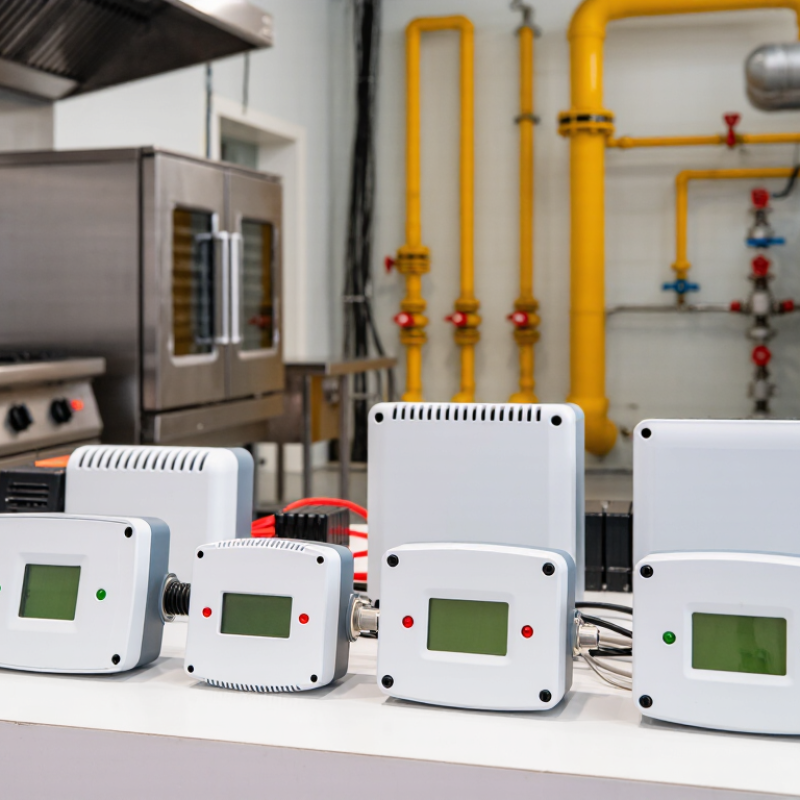
A Natural Gas Leak Detector senses combustible gas before a small leak becomes a serious hazard. Natural gas is usually odorized, but smell alone is unreliable. A detector provides an earlier, measurable warning. In field inspections, technicians often place sensors near ceilings because methane rises. Portable detectors support maintenance teams during pipe checks, appliance servicing, and emergency investigations. Fixed detectors provide continuous monitoring in kitchens, boiler rooms, laboratories, and industrial spaces. Some models use catalytic bead sensors, while others use infrared technology. Catalytic sensors can respond quickly but may require regular calibration. Infrared sensors often perform well in demanding environments. No device is perfect.

Tips: Choose the sensor type for the gas and installation area. Check detection range, alarm volume, ingress protection, and operating temperature. Installers should follow local safety requirements and manufacturer instructions. Test alarms regularly with approved procedures. Keep ventilation paths clear. A detector hidden behind equipment may react too slowly. Record calibration dates and replace aging sensors. Small details matter.

For global buyers, dependable performance requires more than a specification sheet. Ask for test records, calibration guidance, warranty terms, and technical support.

Review the detector’s response time under realistic conditions, including cold rooms, dust, and airflow. Avoid placing sensors beside strong ventilation outlets. That mistake is common.

Professional installation and periodic inspection remain essential, because a detector supports safety work but cannot repair leaking equipment.

China’s Natural Gas Detector Manufacturing Landscape

China’s natural gas detector manufacturing landscape combines mature electronics production with flexible industrial customization. Many factories produce fixed and portable detectors for homes, workshops, warehouses, and energy facilities. Their capabilities often include sensor assembly, alarm programming, enclosure molding, and small-batch OEM development. During supplier evaluations, buyers should inspect calibration records, production workflows, and aging-test procedures. A serious manufacturer can explain sensor lifespan, alarm thresholds, battery performance, and replacement planning in clear technical language. Factory visits also reveal practical details, such as clean assembly areas and traceable component storage.

Tips: Request sample units from different production batches. Test response time, alarm volume, display readability, and performance after repeated use. Ask for independent test reports and quality-control records. Confirm whether technical documents match the actual device. A low quotation may hide weaker sensors or limited after-sales support. It is worth comparing total ownership cost, not only the purchase price.

Chinese suppliers can support various gas types, communication methods, and installation environments. However, customization should follow a documented engineering process. Changes to sensors, software, or housings may affect accuracy. Buyers should define the target gas, detection range, operating temperature, ingress protection, and maintenance routine before ordering. I have seen product specifications look convincing while practical instructions remain vague. That gap deserves attention. Reliable cooperation depends on transparent testing, consistent documentation, and responsive technical communication throughout production and delivery.

Core Technologies Used in Natural Gas Detection Equipment

Natural gas detection equipment relies on several core technologies. Catalytic bead sensors measure combustible gas through a controlled oxidation reaction. They respond quickly, but oxygen levels and sensor aging can affect accuracy. Infrared sensors detect methane by measuring how gas absorbs specific wavelengths. They usually resist poisoning better and support stable monitoring in demanding industrial areas.

A reliable Natural Gas Alarm Detector combines sensing hardware with signal processing. Microcontrollers compensate for temperature, humidity, and baseline drift. Audible alarms, flashing indicators, relay outputs, and wireless notifications help people react quickly. Many professional units display gas concentration as a percentage of the lower explosive limit. Enclosures should resist dust, moisture, and accidental impacts. No sensor is perfect. Calibration records, response tests, and scheduled maintenance still matter. In field inspections, poor placement often causes more problems than weak hardware.

Tips: Install methane sensors near ceilings because methane rises in still air. Keep them away from direct ventilation, steam, and greasy surfaces. Test the alarm with approved calibration gas, not household fuel. Check the date, battery condition, and alarm volume regularly. A forgotten test is still a failure. Suppliers should provide clear manuals, traceable calibration data, and technical support for local installation conditions.

China Best Natural Gas Detector Suppliers for Global Buyers - Core Technologies Used in Natural Gas Detection Equipment
Detection Technology Primary Target Gases Operating Principle Representative Measurement Range Typical Response Time Key Advantages Typical Applications
Catalytic Bead (Pellistor) Methane and other combustible gases A heated catalyst oxidizes the gas, causing a change in the temperature and electrical resistance of a sensing bead. The signal is related to the percentage of the lower explosive limit (LEL). Typically 0–100% LEL Usually less than 15 seconds for T90 Mature technology; broad combustible-gas coverage; suitable for fixed and portable instruments; generally cost-effective. Requires oxygen for combustion; can be affected by silicone compounds, sulfur compounds, lead, and other catalyst poisons; consumes more power than some alternatives. Industrial plants, gas storage areas, utility tunnels, boiler rooms, and portable multi-gas monitors.
Non-Dispersive Infrared (NDIR) Methane, carbon dioxide, and selected hydrocarbons Gas molecules absorb infrared radiation at specific wavelengths. The reduction in transmitted light is used to calculate gas concentration. Commonly 0–100% LEL or 0–100% volume, depending on design Typically 10–30 seconds for T90 Does not require oxygen; resistant to many catalyst poisons; low long-term drift; suitable for high methane concentrations. Higher initial cost; optical windows can be affected by dust or condensation; water vapor and other gases may require compensation. Natural gas processing, compressor stations, pipeline monitoring, landfill gas systems, and confined-space safety.
Open-Path Infrared Methane and selected hydrocarbon vapors An infrared beam travels across an open area between a transmitter and receiver. Gas concentration is evaluated over the beam path using concentration multiplied by path length. Often expressed in LEL·m; typical alarm settings are application-specific Often 2–10 seconds, depending on configuration Covers large areas; detects gas clouds crossing a monitored path; useful where point sensors may not represent the hazard. Requires clear optical alignment; performance can be affected by fog, heavy rain, dust, vibration, and obstructions. Perimeter monitoring, LNG facilities, tank farms, loading terminals, and long-distance hazard detection.
Photoacoustic Infrared Methane, carbon dioxide, and selected trace gases Modulated infrared light is absorbed by the target gas, producing pressure waves that are measured by a microphone or acoustic detector. From ppm-level measurement to percentage-volume measurement, depending on configuration Commonly 10–60 seconds High sensitivity; can support multi-gas analysis; suitable for low-concentration leak screening and process measurement. More complex optical and acoustic design; flow, vibration, pressure, and humidity compensation may be required. Leak surveys, environmental monitoring, process control, and laboratory or portable gas analysis.
Metal-Oxide Semiconductor (MOS) Methane, LPG, hydrogen, carbon monoxide, and volatile organic compounds Adsorption of gas molecules changes the electrical conductivity of a heated metal-oxide sensing material. Typically ppm-level to several thousand ppm; model-dependent Usually a few seconds to several tens of seconds Low sensor cost; compact construction; useful for trend monitoring and consumer or light-industrial devices. Limited selectivity; affected by humidity, temperature, and interfering gases; may require frequent calibration and compensation. Domestic gas alarms, indoor-air monitoring, low-cost leak indication, and preliminary screening.
Electrochemical Carbon monoxide, hydrogen sulfide, oxygen, and selected toxic gases A chemical reaction at electrodes generates a current proportional to the concentration of the target gas. Commonly ppm-level for toxic gases; oxygen sensors are often approximately 0–30% volume Typically 10–60 seconds for T90 High sensitivity for toxic gases; low power consumption; compact size; good selectivity when properly designed. Limited operating life; affected by temperature and interfering gases; not generally the primary choice for methane measurement. Worker-safety monitors, confined-space entry, combustion areas, and multi-gas instruments.
Ultrasonic Gas Leak Detection Pressurized natural gas and compressed-gas leaks A high-pressure gas leak generates ultrasonic acoustic energy. Microphones detect the sound level and frequency characteristics rather than measuring gas concentration directly. Acoustic detection; alarm thresholds are commonly defined in dB and adjusted for background noise Often less than 1–3 seconds Fast response; does not require the gas cloud to reach the sensor; suitable for ventilated or outdoor areas. Cannot normally provide direct gas concentration; affected by machinery noise, wind, distance, leak pressure, and acoustic obstructions. Compressor stations, valve manifolds, gas skids, offshore platforms, and high-pressure pipeline equipment.
Laser-Based Methane Detection Methane A laser is tuned to a methane absorption line. The system measures the change in returned or transmitted light to identify methane along a path or at a remote target. From ppm·m path-integrated measurement to high-concentration leak detection, depending on instrument type Often near real-time, from less than 1 second to several seconds High methane selectivity; remote measurement capability; useful for surveying difficult-to-access locations. Performance depends on optical reflectivity, line of sight, weather, distance, and correct targeting; typically focused on methane rather than multiple gases. Pipeline patrols, facility inspections, aerial surveys, roadside surveys, and remote leak localization.
Flame Ionization Detection (FID) Hydrocarbons, including methane Hydrocarbons are burned in a hydrogen flame, producing ions that generate an electrical current proportional to the hydrocarbon concentration. Typically ppm-level to percent-level hydrocarbon measurement Often less than 1–5 seconds in portable sampling systems Very sensitive to hydrocarbons; suitable for leak surveys and quantitative screening over a wide concentration range. Requires a fuel gas supply; does not identify individual hydrocarbons without additional separation; not ideal for oxygen-deficient environments. Pipeline leak surveys, environmental inspection, refinery maintenance, and laboratory analysis.
Note: Measurement ranges, response times, alarm thresholds, environmental ratings, and calibration intervals vary by instrument design and applicable standards. Representative values should be confirmed against the technical documentation of the selected equipment.

Safety Standards and Certifications for Global Markets

China Best Natural Gas Detector Suppliers for Global Buyers

Safety compliance should be checked before price or production capacity. A natural gas detector for global markets may need different approvals for each destination. Buyers should request test reports, certificates, product specifications, and quality-control records. CE marking may support European market access, while UKCA can apply in Great Britain. ATEX or IECEx certification may be necessary for equipment used in potentially explosive areas. These approvals are not interchangeable.

A Battery Powered Natural Gas Detector should also meet relevant performance, electrical, and electromagnetic compatibility requirements. Check whether the device follows applicable standards, such as EN 50194-1 for domestic gas alarms or IEC 60079-29-1 for gas detection performance. Confirm alarm limits, sensor response time, calibration intervals, operating temperature, and ingress protection. A simple bench test can reveal delayed alarms or unstable readings. Small details matter.

Battery safety deserves attention. Ask for battery specifications, runtime data, transport documentation, and protection against low-voltage failure. Suppliers should explain how every unit is tested before shipment. Field inspections often find incomplete labels or manuals translated too quickly. That weakness can create confusion during installation. A certificate alone is not enough. Buyers should verify certificate numbers with the issuing body and compare them with the exact model, sensor type, and production version. Suppliers may provide strong documents, yet their factory controls still need independent review.

How to Evaluate Chinese Natural Gas Detector Suppliers

Choosing a Chinese natural gas detector supplier requires more than comparing quotations. Global buyers should examine technical evidence, production discipline, and communication quality. Request product specifications, sensor type, detection range, alarm level, operating temperature, and expected service life. A reliable supplier explains limitations clearly.

Ask for recent test reports, calibration records, and quality management documents. Check whether these documents match the exact model being offered. Do not accept a generic certificate without model identification.

For a Battery Operated Natural Gas Detector, inspect battery access, low-power warnings, alarm volume, and standby duration. Test the device in a controlled environment with a qualified professional.

Factory evaluation also matters. Review assembly areas, incoming component checks, aging tests, and final inspection records. Ask how defective units are isolated and corrected. A video tour helps, but an independent inspection provides stronger evidence. Send detailed questions and measure response time. Clear answers often reveal practical experience.

Sample testing can expose small weaknesses. Check enclosure seams, button feedback, display readability, and alarm behavior after repeated use. I once overlooked battery replacement instructions, and that created avoidable confusion for installers. Suppliers should provide manuals with wiring diagrams, maintenance steps, and warnings in accurate English. However, documents may still contain awkward wording. Have a technical reviewer examine them before purchase. Supplier history, spare-part support, and traceable batch records deserve equal attention.

Product Selection, Customization, and Export Considerations

Choosing a natural gas detector supplier requires more than comparing prices. Start with the gas type, detection range, response time, and installation area. A kitchen may need a compact wall-mounted unit. An industrial room may require multiple sensors, alarms, and relay outputs. Check calibration records and test each detector with certified gas during acceptance.

Customization should match the site, not just the buyer’s logo. Suppliers may adjust cable length, alarm thresholds, display language, enclosure material, and communication interfaces. For dusty or humid locations, ask about ingress protection and operating temperature.

Battery models need clear replacement intervals. Small details matter. A poorly placed sensor can delay an alarm.

Export preparation needs practical evidence. Request datasheets, manuals, packing photos, serial-number lists, and factory inspection records. Confirm voltage, plug type, labeling, spare parts, and warranty terms before shipment. Regional certification requirements can differ, so verify them with the importer or local authority.

Do not accept vague claims of worldwide compliance. A common mistake is treating a factory test as permanent calibration. It is not. I would also question unusually low prices, because missing accessories or weak after-sales support may appear later.

During supplier evaluation, ask for a sample, review its alarm behavior, and record the test conditions. That small record can prevent a costly dispute.

China IFD2020 Infrared Flame Detector: Market Insights from MarketsandMarkets and NFPA Fire Safety Reports

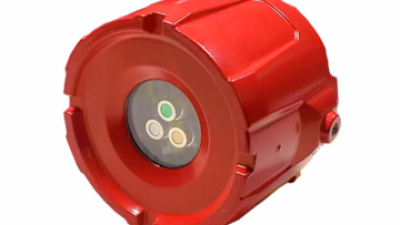
China’s IFD2020 infrared flame detector reflects the growing demand for faster and more dependable fire-monitoring technology. A MarketsandMarkets analysis estimates that the global flame detector market could grow from approximately USD 1.7 billion in 2023 to USD 2.3 billion by 2028, representing a compound annual growth rate of about 6.4%. This expansion is supported by increased safety requirements in industrial plants, energy facilities, warehouses, and other environments where early flame recognition is essential.

NFPA’s *Fire Loss in the United States During 2022* report recorded approximately 1,504,500 fires, 3,790 civilian fire deaths, and around USD 18.1 billion in direct property damage. These figures highlight the importance of continuous detection systems that can respond before a small flame develops into a major incident. Manufactured in China by experienced industry suppliers, this infrared flame sensor operates across 4.3μm and 5.0μm spectral bands for reliable flame recognition. Its real-time optical path sampling mode provides continuous monitoring, while the integrated LED indication display offers clear status alerts. Operating at DC24V with a current of no more than 30mA, the sensor combines low power consumption with practical performance for a wide range of fire-safety applications.

FAQS

What technical details should buyers request from a natural gas detector supplier?

Request the gas type, sensor type, detection range, response time, alarm level, and operating temperature.

How can buyers verify a supplier’s quality documents?

Ask for recent test reports, calibration records, and quality management documents.

What should be checked on a battery-operated detector?

Inspect battery access, low-power warnings, alarm volume, and standby duration.

What factory areas deserve attention during an evaluation?

Review incoming component checks, assembly areas, aging tests, and final inspections.

What should sample testing include?

Examine enclosure seams, button feedback, display readability, and repeated alarm behavior.

How should buyers choose customization options?

Match customization to the site, not only to appearance.

What export details should be confirmed before shipment?

Confirm voltage, plug type, labels, spare parts, warranty terms, manuals, and packing details.

What mistakes can create problems after purchase?

Do not treat a factory test as permanent calibration.

Conclusion

Natural Gas Detector systems are essential tools for identifying methane and other combustible gas leaks before they develop into fires, explosions, or serious safety incidents. This article explains their main purposes, including residential protection, industrial monitoring, commercial facility safety, and pipeline or storage-area inspection. It also introduces common detector types, such as fixed, portable, and wearable devices, along with key technologies including catalytic combustion, infrared sensing, semiconductor detection, and wireless communication. Readers will gain a practical understanding of how detection accuracy, response time, alarm functions, durability, and environmental adaptability affect product performance.

China has developed a broad manufacturing base for natural gas safety equipment, offering various options for global buyers. The article outlines how to assess suppliers by reviewing production capabilities, quality control systems, testing procedures, certifications, export experience, and after-sales support. It also discusses international safety standards, product customization, packaging, documentation, logistics, and installation requirements, helping buyers select reliable products that match local regulations, application conditions, and long-term operational needs.
Sophie

Sophie

Sophie is a dedicated marketing professional with extensive expertise in the gas safety industry. With a firm understanding of the critical importance of reliable gas detection solutions, she plays a key role in communicating the values and advantages of her company’s innovations. Sophie is......
Previous 2026 Best Gas Leak Detectors for Global Buyers
Xinhaosi Electronic Detection
Online inquiry channel
XHS

Hello, welcome to Xinhaosi, your trusted manufacturer for all gas safety needs.

Start WhatsApp Chat