Leave Your Message
Engineered for extreme sub-zero reliability across Scandinavian offshore oil & gas rigs, green hydrogen projects, municipal utilities, and commercial real estate.

ATEX-certified safety monitoring engineered for North Sea offshore platforms and petrochemical processing terminals.
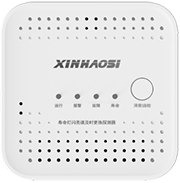
EN 50291-compliant precision CO and methane alarms designed for Scandinavian residential buildings, hotels, and smart homes.

Rapid-response automatic shut-off safety valves protecting critical infrastructure from pipeline leaks at the source.

Smart wireless IoT sensor arrays engineered for subterranean city pipe networks, biogas plants, and utility corridors.
Strategic analysis of gas safety requirements across the Kingdom of Norway — from the North Sea Continental Shelf to Arctic maritime corridors and electrified green energy storage.
Norway stands at the global forefront of energy engineering, maritime decarbonization, and stringent occupational health regulations. With strict environmental oversight governed by the Petroleum Safety Authority Norway (Havtil), Directorate for Civil Protection (DSB), and Arbeidstilsynet (Norwegian Labour Inspection Authority), continuous toxic gas monitoring is a vital mandate. In both high-hazard offshore extraction and modern electrified infrastructure, Carbon Monoxide (CO) represents a silent, odorless killer that requires zero-tolerance detection accuracy.
On Norwegian Continental Shelf platforms and CCS terminal sites such as the Northern Lights project in Øygarden, CO detection serves as a primary early-warning marker for incomplete combustion, turbine flare anomalies, and CO2 injection stream containment monitoring.
Norway boasts the world's highest per-capita EV penetration. Multi-story parking structures and utility-scale BESS facilities require electrochemical CO and Hydrogen detectors to capture off-gassing up to 15 minutes before thermal runaway escalation.
With more than 1,000 subterranean road and railway tunnels (including the Lærdal and Ryfast projects), continuous EN 50545-1 compliant CO and NO2 sensor arrays are mandatory to regulate ventilation velocity and prevent toxic buildup in enclosed traffic spaces.
From modern hybrid fjord ferries in Bergen and Stavanger to vast closed-containment aquaculture feeding stations, rugged IP67 marine-certified CO monitors ensure crew survivability in confined bilge and boiler compartments.
As a specialized CO Gas Detector OEM/ODM Factory and Manufacturer, we integrate military-grade Japanese and European electrochemical sensors with specialized temperature-compensating microcontrollers. This ensures uncompromised baseline stability from -40°C Arctic winters in Tromsø to +55°C industrial turbine enclosures, eliminating false positives caused by Scandinavian humidity and coastal salinity.
Proprietary digital filtering algorithms continuously compensate for temperature drift, pressure drops, and high humidity, delivering ±3% full-scale precision for CO gas concentrations.
Constructed with low-temperature silicone gaskets, stainless-steel 316L flame arrestors, and internal heating options for uninterrupted operation in harsh Norwegian winter climates down to -40°C.
Seamlessly integrates into Norwegian SCADA, PLC, and BMS networks via standard 4-20mA, RS485 Modbus-RTU, Wireless LoRaWAN, and BACnet IP protocols for automated ventilation interlock.
Compare our factory-direct industrial, commercial, and residential CO gas detector specifications customized for Scandinavian safety standards.
| Detector Category | Target Gas / Range | Sensor Technology | Response Time (T90) | Certifications / Compliance | Primary Norway Application |
|---|---|---|---|---|---|
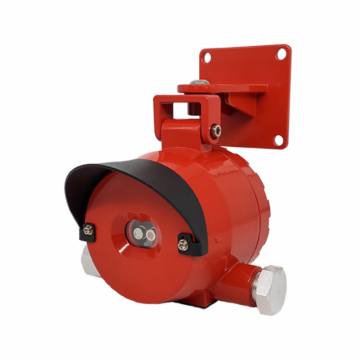
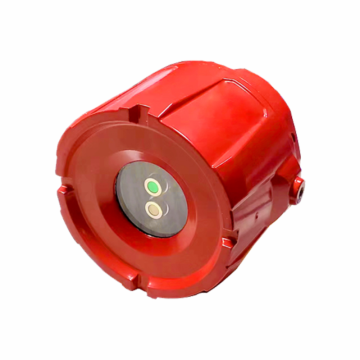
| Explosion-Proof Fixed Transmitter | CO: 0-500 / 0-1000 ppm | Industrial Electrochemical Cell | < 20 seconds | ATEX Zone 1/2, IECEx, CE, IP66 | North Sea Off-shore Rigs, Refineries, CCS Terminals |
| Subterranean Tunnel & Garage Sensor | CO: 0-300 ppm | NO2: 0-30 ppm | Dual-Channel Smart Electrochemical | < 30 seconds | EN 50545-1, CE, EMC Class B | Road Tunnels (Lærdal/Ryfast), Underground Parking |
| BESS Early Warning Detector | CO (0-1000 ppm) + H2 (0-2000 ppm) | Multi-Sensor Micro-Optical / Electro | < 10 seconds | UL 9540A compliant, CE, RoHs | EV Battery Storage, Power Grid Substations |
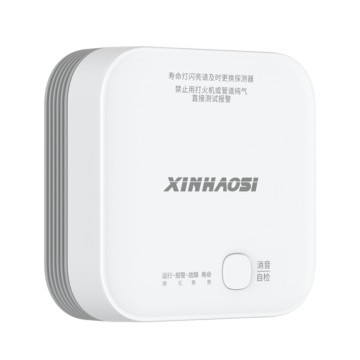
| Commercial / Residential Smart Alarm | CO: 0-1000 ppm (Digital LCD) | Low-Power Micro Electrochemical | < 30 seconds at 300ppm | EN 50291-1:2018, TEK17 Standard | Norwegian Residential Apartments, Cabins (Hytter), Hotels |
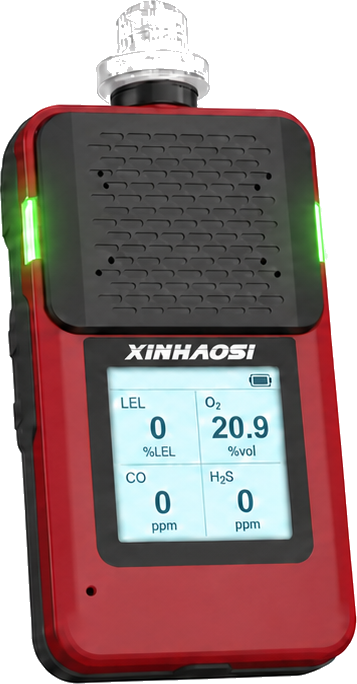
| Portable Multi-Gas Confined Space Monitor | CO / H2S / O2 / LEL (4-in-1) | Catalytic Combustion + Electro | < 15 seconds | ATEX Ex d ia IIC T4, IP67 | Shipyard Maintenance, Aquaculture Tanks, Utility Shafts |


We utilize advanced electronic detection technology to make unknown gas leak risks clear and visible. Founded in 2003, Xinhaosi is one of the most influential and reliable brands in the gas safety industry. We provide customer-focused products and services to safeguard the safe operation of every factory, the comfort of every city, the peace and happiness of every home.
Powered by cutting-edge production systems, multi-tiered SMT automated assembly lines, high-precision gas calibration chambers, and stringent ISO9001/ISO14001 quality frameworks, we deliver more advanced, intuitive, and precise gas safety solutions for shaping a safer future world.
More About Our FactoryStay tuned for the latest technical updates, global safety standards, and market intelligence from Xinhaosi and the international gas detection industry.
The global gas detection industry is witnessing a surge of technological breakthroughs in early 2026, with leading players launching advanced solutions that integrate precision sensing, real-time connectivity, and multi-functional safety features to address evolving risks in high-hazard sectors like oil and gas, chemicals, and refining.
As Battery Energy Storage Systems (BESS) play an increasingly critical role in global renewable energy grids, the demand for specialized gas detection equipment tailored to BESS safety needs is surging—driven by risks like thermal runaway, which releases hazardous gases such as hydrogen (H₂), carbon monoxide (CO) and methane (CH₄).
A suite of new national standards and technical regulations for gas detection equipment rolled out in 2026, marking a critical shift toward stricter safety oversight and pre-accident prevention across high-risk sectors like petrochemicals, catering, and municipal engineering.
Collaborating with premier engineering conglomerates, municipal gas corporations, and safety contractors worldwide.
























Direct factory supply of certified combustible, toxic gas, and optical flame monitoring hardware ready for export to Norway distributors, EPCs, and systems integrators.
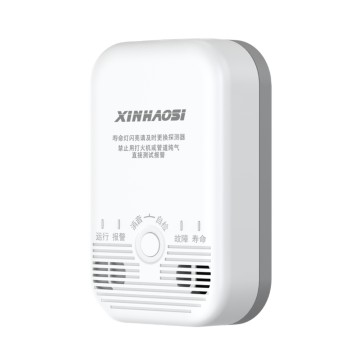
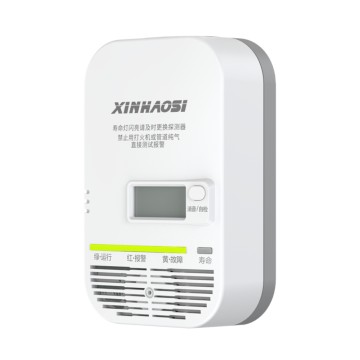
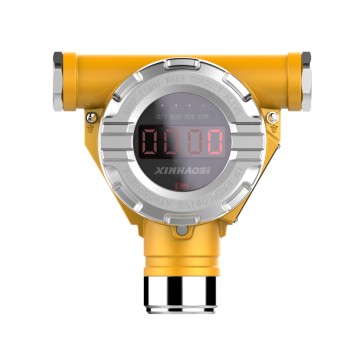
Key questions answered regarding compliance, sub-zero calibration, lead times, and OEM customization for Norwegian distributors.
Our commercial and residential CO detectors strictly adhere to EN 50291 standards required under Norwegian TEK17 guidance. They feature precision electrochemical cells, tamper-proof batteries, high-decibel audible alarms (>85dB at 3 meters), and visual strobe indicators for modern Nordic residential complexes and wooden cabins (hytter).
Yes. Our explosion-proof gas detectors (such as the GTYQ-AT0505/d series) utilize heavy-duty cast aluminum or 316L stainless-steel enclosures with IP66/IP67 ingress ratings. They feature anti-corrosion coating resistant to saline marine atmospheres and ATEX/IECEx certifications for Zone 1 and Zone 2 hazardous areas.
We supply dual-channel CO and Nitrogen Dioxide (NO2) monitoring systems conforming to European Standard EN 50545-1. These instruments deliver real-time 4-20mA and RS485 Modbus output to tunnel ventilation controllers (VFDs) to automatically purge vehicle exhaust and prevent poisonous accumulation.
Our electrochemical CO sensors feature built-in micro-thermostatic compensation capable of operating smoothly from -40°C to +55°C. Recommended field calibration intervals are 12 months under standard conditions, with plug-and-play pre-calibrated sensor cartridge replacements available to minimize offshore downtime.
Yes. We provide full-chain OEM/ODM manufacturing including customized enclosure colors, bilingual Norwegian/English instruction manuals, custom firmware protocols (Modbus, LoRaWAN, Zigbee), and custom silk-screen branding tailored to European distribution networks.
Standard sample orders ship via air courier (DHL/FedEx/UPS) within 3-5 business days. Bulk industrial production orders typically ship in 2-3 weeks via direct air or sea freight to Port of Oslo or Port of Bergen with full CE, RoHS, ATEX, and Certificate of Origin documentation.