Leave Your Message
Precision engineered sensing equipment protecting residential dwellings and hospital medical gas pipeline networks with sub-second response times.
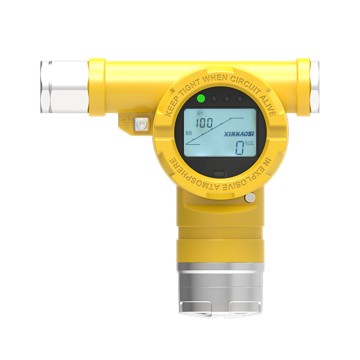
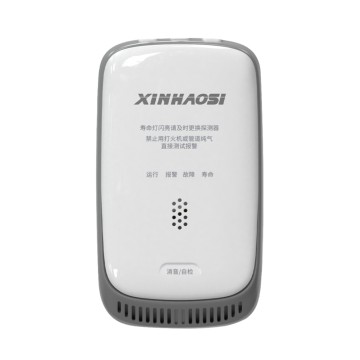
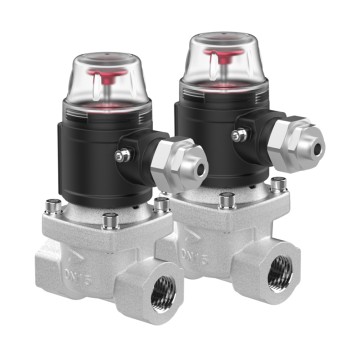
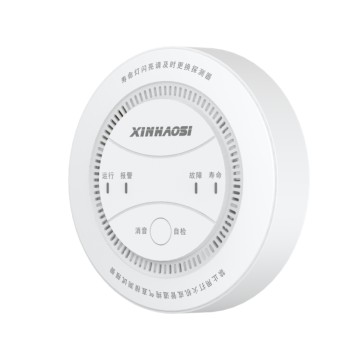
Gas safety has transitioned from passive alert sounding to proactive, intelligent hazard mitigation. In residential architecture, gas detectors for home act as the frontline defense against combustible fuels (methane, natural gas, liquefied petroleum gas) and silent asphyxiants like carbon monoxide (CO). Simultaneously, within medical facilities, Medical Gas Pipeline Systems (MGPS) demand an ultra-stringent echelon of gas detection technologies. Modern hospitals depend on an uninterrupted web of centralized pipelines delivering life-sustaining gases—including Medical Oxygen (O₂), Nitrous Oxide (N₂O), Carbon Dioxide (CO₂), Medical Air, and Surgical Vacuum lines—directly into Operating Theatres, Intensive Care Units (ICU), and Neonatal Suites.
While household applications emphasize compact form factor, cloud IoT notification, and integration with emergency cutoff valves, hospital pipeline monitoring requires continuous multi-point telemetry, intrinsic explosion-proof certification (such as ATEX / IECEx), and micro-concentration detection to mitigate severe risks: oxygen enrichment fires, trace anesthetic gas occupational exposure, and manifold pressure integrity failures. Integrating robust sensor hardware across both domestic and clinical spaces creates a comprehensive standard for life safety.
In hospital wards and hyperbaric chambers, oxygen concentration exceeding 23.5% dramatically lowers ignition thresholds. High-precision O₂ sensors trigger immediate zone ventilation and pressure relief.
Chronic micro-leaks of nitrous oxide and halogenated anesthetics in surgical suites present severe health hazards. NDIR and PID sensors guarantee clinical occupational health compliance.
From residential kitchen cooktops to hospital central boiler plants and kitchen manifold systems, combustible gas detectors instantly activate electro-mechanical shut-off valves.
The deployment of gas detectors across sensitive hospital infrastructure and smart residential spaces relies on distinct sensor modalities optimized for target gas chemistry, response speed (t90), selectivity, and operating lifespan:
NDIR sensors utilize specific infrared absorption wavelengths to quantify gases such as Carbon Dioxide (CO₂) and Hydrocarbons without sensor poisoning. Because NDIR requires no chemical reaction, it exhibits zero drift across years of operation in hospital pipeline monitoring manifolds and smart home HVAC air intake dampers.
Ideal for toxic gases (CO, NO, NO₂) and Oxygen concentration monitoring. These sensors generate current directly proportional to gas concentration, operating on micro-watt power budgets suited for wireless mesh sensor grids along secondary medical gas branches.
The benchmark for Lower Explosive Limit (LEL) combustible gas detection. Engineered with high-stability coils and anti-poisoning coatings to withstand siloxanes and humidity shifts in domestic kitchens and hospital gas tank depots.
Utilizing high-energy ultraviolet lamps (10.6 eV) to ionize Volatile Organic Compounds (VOCs) and sterilizing agents (such as Ethylene Oxide) widely utilized in hospital medical device reprocessing units.
| System Parameter | Residential / Home Gas Detectors | Hospital Medical Gas Pipeline Monitoring (MGPS) |
|---|---|---|
| Primary Target Gases | Methane (CH₄), LPG (Propane/Butane), Carbon Monoxide (CO) | Medical O₂, N₂O, CO₂, Medical Air (Dew Point/CO/CO₂), EtO, Combustibles |
| Regulatory Standards | EN 50194, UL 1484, GB 15322 | NFPA 99 (Health Care Facilities Code), ISO 7396-1, HTM 02-01, ATEX Zone 1/2 |
| Response Time (t90) | < 30 seconds | < 5 to 10 seconds (Critical Care / Manifold Rooms) |
| System Redundancy | Single or dual sensor, autonomous acoustic alarm | Dual/triple sensor redundancy, 24/7 telemetry to BMS/SCADA, optical/acoustic master alarms |
| Automatic Action | Local solenoid valve pulse shut-off, exhaust fan trip | Sectional valve box isolation, emergency scavenge ventilation, central medical gas alarm |
| Communication Protocols | Wi-Fi, Zigbee, Matter, RF 433MHz | Modbus RS485, BACnet IP, 4-20mA HART, Ethernet, Industrial LoRaWAN |
Optimizing safety outcomes through precision hardware placement, real-time edge telemetry, and deterministic emergency interlocking.
Continuous surveillance of Waste Anesthetic Gas Disposal (WAGD) lines and ceiling-mounted medical pendants. Gas detectors pinpoint N₂O and halogenated gas accumulation before surgical staff or patients experience cognitive impairment or physiological distress.
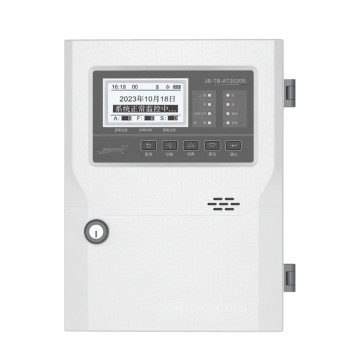
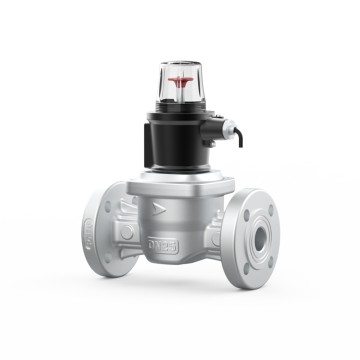
High-pressure cylinder banks and liquid oxygen (LOX) cryogenic vaporizers demand explosion-proof multi-channel controllers (such as the JB-TB-AT2020S) linked to heavy-duty emergency shut-off valves (XF3 Series) to contain pipeline rupture events.
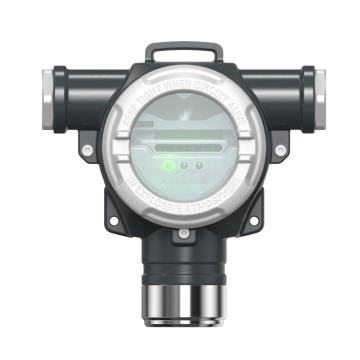
Ceiling or wall-mounted detectors (JT-AT2007 Series) continuously sample kitchen air. Upon detecting early-stage methane concentration (8% LEL), the unit triggers localized sirens and outputs a DC 12V pulse to snap-close the gas supply solenoid within 1 second.
From domestic safety devices to city-wide gas pipeline monitoring ecosystems.

Detection Systems
Safety First from Precision Sensing
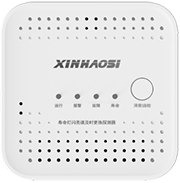
Gas Detectors
Home Safety from Gas Monitoring

Gas Solenoid Valves
Protecting from the Source

Distribution & Monitoring
Smart Sensing for Urban Gas

 We utilize advanced electronic detection technology to make unknown gas leak risks clear and visible.
Founded in 2003, Xinhaosi is one of the most influential and reliable brands in gas safety industry. We provide customer-focused products and services to safeguard the safe operation of every factory, the comfort of every city, the peace and happiness of every home. Powered by cutting‑edge production systems and technology, we deliver more advanced, intuitive, and precise gas safety solutions for shaping a safer future world.
More About Us →Empowered by technology, full-chain integration, and comprehensive protection — shaping the future of industrial pipeline and residential security with intelligence.
Stay tuned for the latest updates from Xinhaosi & the Global Gas Safety Industry.
The global gas detection industry is witnessing a surge of technological breakthroughs in early 2026, with leading players launching advanced solutions that integrate precision sensing, real-time connectivity, and multi-functional safety features to address evolving risks in high-hazard sectors.
As Battery Energy Storage Systems (BESS) play an increasingly critical role in global renewable energy grids, the demand for specialized gas detection equipment tailored to BESS safety needs is surging—driven by risks like thermal runaway emitting H₂, CO, and CH₄.
China and international safety bodies have rolled out a suite of new national standards and technical regulations for gas detection equipment in 2026, marking a critical shift toward stricter oversight and pre-accident prevention across healthcare, petrochemicals, and municipal networks.
























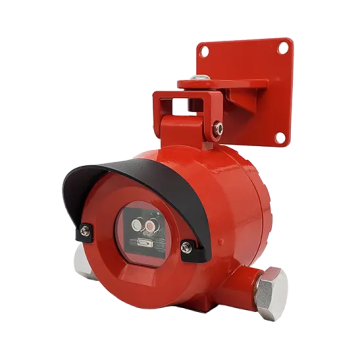
Certified gas alarms, toxic vapor monitors, multi-channel controllers, flame detectors, and emergency shut-off valves.