

Can Carbon Monoxide Travel Through Building Pipes?
Carbon monoxide risk is usually associated with the room where fuel is burned. An accident investigation in Dongguan, China, shows why a building safety review cannot stop at the boiler-room door.
According to the official report, exhaust from a gas-fired boiler had been connected to a shared drainage system rather than a compliant flue. The exhaust moved through the pipe network and entered apartments on upper floors through drainage openings. Two occupants in a closed apartment lost consciousness after prolonged exposure.
This was an unusual and improper installation. Even so, the case raises a useful question for building owners and engineering teams: if combustion exhaust enters the wrong building system, where can it travel next?
## What the Investigation Found
The building contained a fabric-processing business on the ground floor, with offices and rental apartments above. A small gas-fired boiler served the business.
Investigators found that the boiler exhaust pipe had been connected to the building's public drainage stack. There was no compliant high-level exhaust route separating the combustion gases from the drainage network. As the boiler operated, exhaust could move upward through the shared pipework and enter residential areas through floor drains and wastewater openings.
Several conditions increased the exposure. The boiler ran for an extended period, apartment windows were closed during rainy weather, and drainage openings provided a route into the room. Ventilation was limited while the exhaust continued to enter.
## How Carbon Monoxide Can Move Through Building Pipes
Carbon monoxide does not specifically seek out drainage pipes. It moves with the surrounding exhaust gas and follows pressure differences, airflow and available openings.
When combustion exhaust is wrongly discharged into a drainage stack, service shaft or connected void, that network can carry contaminated air away from the original source. Open drains, ineffective water seals, leaks or pressure changes may then allow it to enter occupied rooms.
The boiler in this case was not inside the affected apartment. An inspection limited to appliances within the residence would not have found the source. Investigators had to trace the exhaust route through the building.
For teams assessing carbon monoxide in mixed-use buildings, the review should cover the combustion source, the complete discharge route and every occupied space that route could reach.
## Why Smell Is Not a Reliable Warning
People who entered the affected apartment reported a sharp smell. That does not mean they smelled carbon monoxide.
Carbon monoxide is colourless and odourless. Combustion exhaust may contain other substances with a noticeable smell, but odour cannot confirm whether CO is present or whether the concentration is safe. Common symptoms include headache, dizziness, weakness, nausea, chest pain and confusion. With heavier exposure, a person may lose consciousness before being able to leave or call for help.
If carbon monoxide exposure is suspected, people should move to fresh air, contact emergency services and stay out of the affected area until qualified personnel have identified and corrected the source.
## What Building Teams Should Review
Mixed-use properties often share walls, shafts, utility routes and ventilation paths. A modification made in one tenancy can therefore create risk elsewhere in the building.
A safety review should check:
- The location and condition of all fuel-burning appliances.
- Whether every appliance has an approved, dedicated exhaust route.
- Whether flues, ducts or pipe connections have been changed.
- Whether a drainage stack, shaft or wall opening could carry exhaust into another area.
- How closed windows, weather and ventilation settings affect airflow.
- Whether inspections are documented and unauthorized changes can be identified.
- Whether gas monitoring reflects the target gas, possible sources and migration paths.
A detector cannot repair a defective flue. The first priorities remain correct appliance installation, compliant exhaust design, suitable ventilation and planned maintenance.
## Where Fixed CO Detection Fits
Fixed carbon monoxide detection provides an additional warning layer. Detector locations should be selected through a site-specific risk assessment that considers likely sources, airflow, room use and possible migration routes. Installation must also follow the product manufacturer's instructions and applicable local requirements.
Depending on the project, fixed gas detectors may connect to a gas alarm controller, audible and visual alarms, remote notifications or other response equipment. Alarm logic and any automatic action should be designed for the actual site rather than copied from a generic equipment list.
Xinhaosi supports distributors, contractors and system integrators with fixed gas detectors, gas alarm controllers and related gas safety equipment. For project discussions, please provide the target gas, site layout, operating conditions and local requirements so that the equipment can be selected around the real application.

## Follow the Complete Exhaust Route
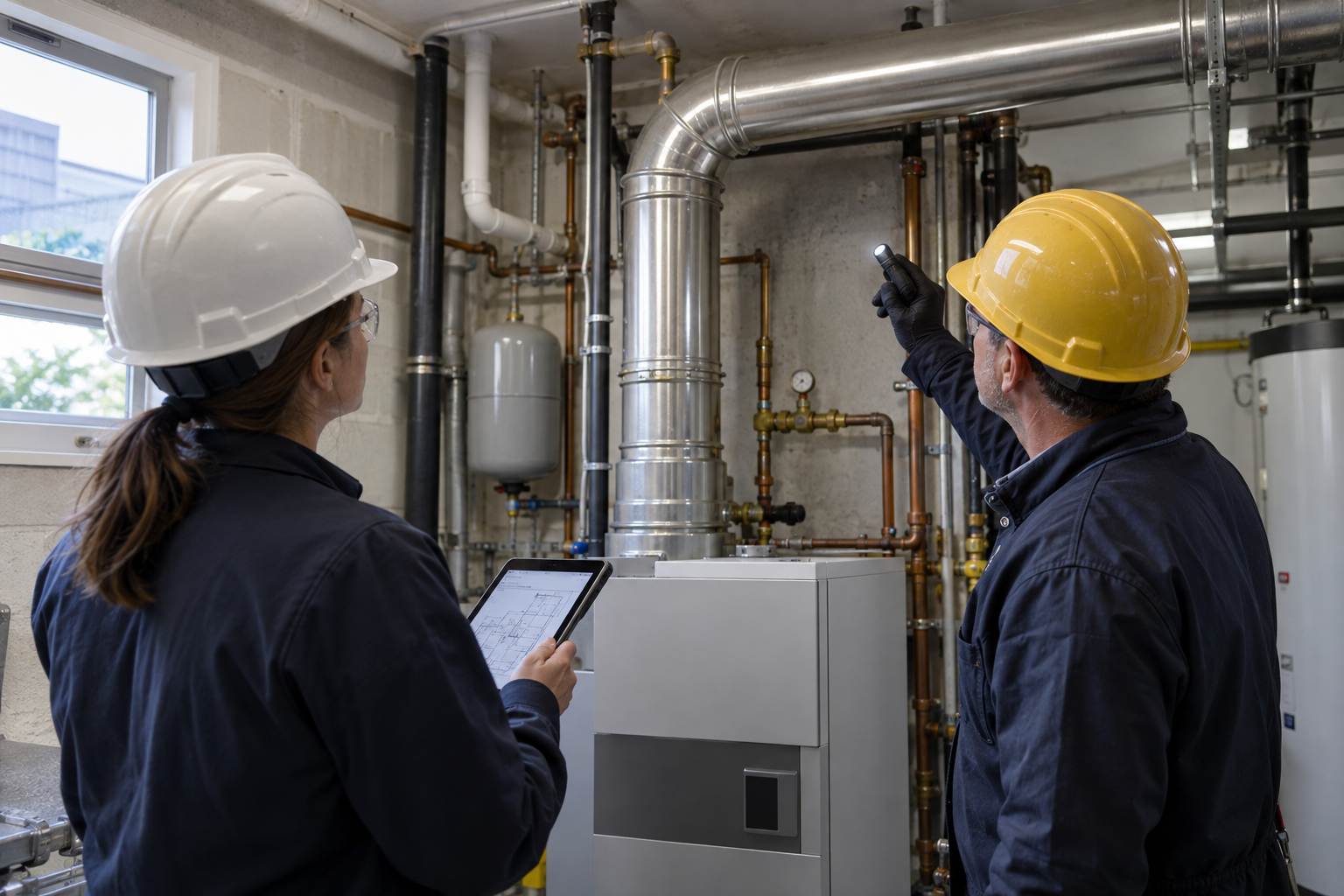
The Dongguan case involved an improper connection between a boiler flue and a drainage system. Its engineering lesson is straightforward: inspect the entire route, not only the appliance.
Building teams should trace combustion gases from the source to the final outdoor discharge point and check every connected pipe, shaft, opening and occupied space along the way. Monitoring can provide earlier warning, but it works best when supported by sound exhaust design, regular inspection and a clear emergency plan.
To discuss a fixed gas detection requirement for a commercial or mixed-use building, contact the Xinhaosi team with your project layout and operating conditions.
Email: global@xhssafety.com
WhatsApp: +86 181 1128 2919
Contact us: https://www.xhssafety.com/contact-us